
How to Sleep With Curly Hair and Refresh Your Curls
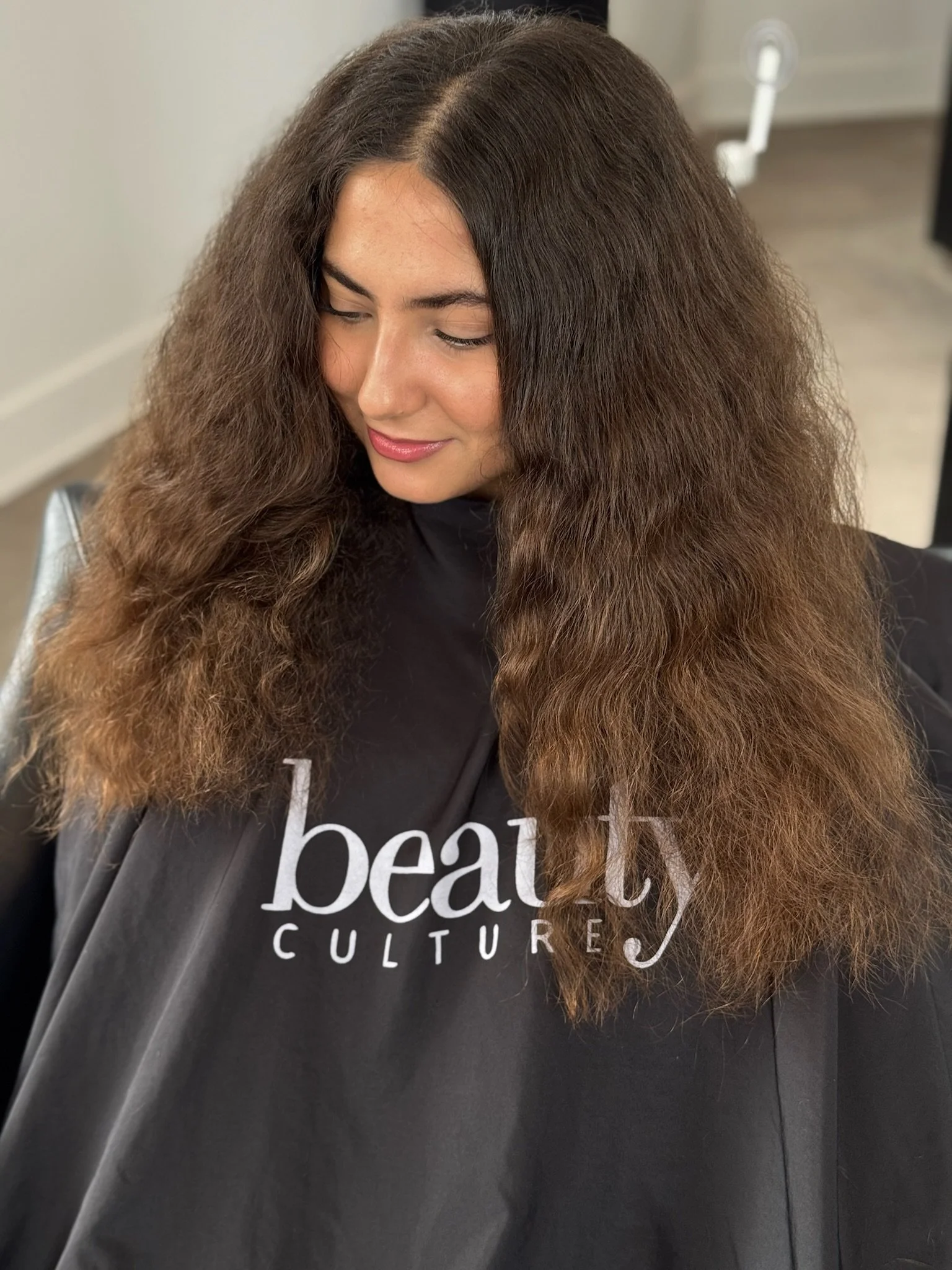
To help your curls hold their shape overnight, gather them loosely if your length allows, or tuck them into a roomy bonnet. A smooth pillowcase is another option if you prefer to leave your hair down. The right choice should feel comfortable and make your morning easier.
Start with the finish you want to preserve. Defined natural curls, a stretched style, and hair you simply want to keep out of the way may need different approaches. Some flattening is normal, even with a good routine. You’re aiming for hair you can enjoy with a manageable refresh before work or school drop-off.
Choose a nighttime style that suits your length
If your hair is long enough to gather comfortably, try a pineapple: a loose ponytail near the top of your head. Use a soft scrunchie, keep the lengths relaxed, and position the tie where you won’t be lying directly on it. Shorter pieces can stay out rather than being pulled tightly toward the crown.
A loose braid is another option. The American Academy of Dermatology recommends both a loose high ponytail and a loose braid to help preserve curls and reduce friction against your pillowcase. A braid can leave its own pattern in your hair, which may suit a stretched style but alter the natural curl definition you want to preserve.
For shorter curls, skip the ponytail if gathering them takes effort or creates tension. A roomy bonnet or a smooth pillowcase lets you leave your hair loose. With longer hair, experiment with where the lengths rest so they stay out from under your head as much as comfortably possible.
Choose a comfortable bonnet or pillowcase
A bonnet or scarf should have room for your hair without compressing it tightly. Check the band and fastening as well as the fabric. A knot at the back of your head may feel fine while you’re standing, then press into your scalp once you lie down.
Silk is a fiber; satin is a weave. Either can be an option, but the label alone won’t tell you whether a particular accessory fits well. Look for a smooth surface and a comfortable edge, and clean the accessory according to its care instructions. If you’d rather sleep without a covering, try a smooth pillowcase.
Before settling in, turn your head and lie in your usual sleeping position. Loosen or reposition anything that pulls or presses, including ties, clips, and knots. Repeated tension can cause breakage and hair loss, according to the AAD’s styling guidance. Persistent scalp pain or changes at your hairline deserve a dermatologist’s assessment.
Keep bedtime preparation simple
On wash nights, start early enough to finish styling and drying before bed.
Once your hair is ready, the evening routine can be brief:
Choose a clean accessory or covering you already find comfortable.
Arrange your curls loosely, without forcing shorter sections into place.
Check how the style feels against your pillow and adjust as needed.
Try the same approach for a few nights and notice both how you sleep and how your curls look afterward. If it needs adjusting, change one thing at a time. Swapping the tie, bonnet, styling products, and morning routine together makes it difficult to tell what helped.
An overnight treatment is optional. You don’t need to add another product simply to help your curls hold their shape.
Let your curls settle before refreshing
In the morning, gently remove your covering or release the scrunchie and give your hair a moment to fall back into place. Then look at what actually needs attention. Repositioning your part or reshaping a few curls around your face may be enough.
Let your plans guide how much you do. You might enjoy the extra volume on an ordinary day and spend more time defining individual curls for an event. If most of your hair already looks good, leave those sections alone.
For curls that need help, start with a small amount of your usual refresher and follow its directions. Some products work on dry or damp hair; others have different instructions. For example, Curlsmith’s Moisture Memory Reactivator guidance allows it to be sprayed onto dry or damp curls, or applied to your hands and smoothed over them.
Work on the affected sections, let them dry if you’ve dampened them, and check the result before adding more. Wetting your whole head for one flattened area can turn a quick touch-up into a much longer styling session.
Know when your routine needs a change
If refreshing takes as long as wash day every morning, look beyond the refresher. Your nighttime style, the way you first set your curls, or the shape of your haircut may need adjusting. Our guide to reducing curly hair frizz explores other parts of the routine that can affect your results.
Refreshing and washing also serve different purposes. Reshaping a curl won’t cleanse your scalp, so keep room in your routine for washing when your hair and scalp need it. Some mornings call for a small adjustment; others call for a fuller reset.
Get help with your curl routine in Kansas City
If you keep waking up to the same styling problem, bring photos of your freshly styled hair and its next-morning shape to your appointment. Tell your stylist what you use at night, which areas give you trouble, and how much time you have to get ready.
Ask whether your appointment can include a refresh demonstration and a chance to try the technique yourself. Aim to leave with one evening adjustment and one morning technique to practice, plus a plan for when to check back if they aren’t helping.
For a local price reference, Studio 39’s Kansas City menu lists a Curl Refresh starting at $48 (checked October 11, 2026). Before booking, ask whether that includes washing, a cut, or instruction. Beauty Culture’s public menu does not list a separate curl-refresh price, so ask us which service suits your needs and confirm the cost and appointment length.
Explore our services and stylists, then book your visit or call (816) 603-2819 for help choosing an appointment. You’ll find Beauty Culture at 501 Southwest Blvd in Kansas City’s Crossroads.