
How to Reduce Frizz Without Weighing Down Your Curls
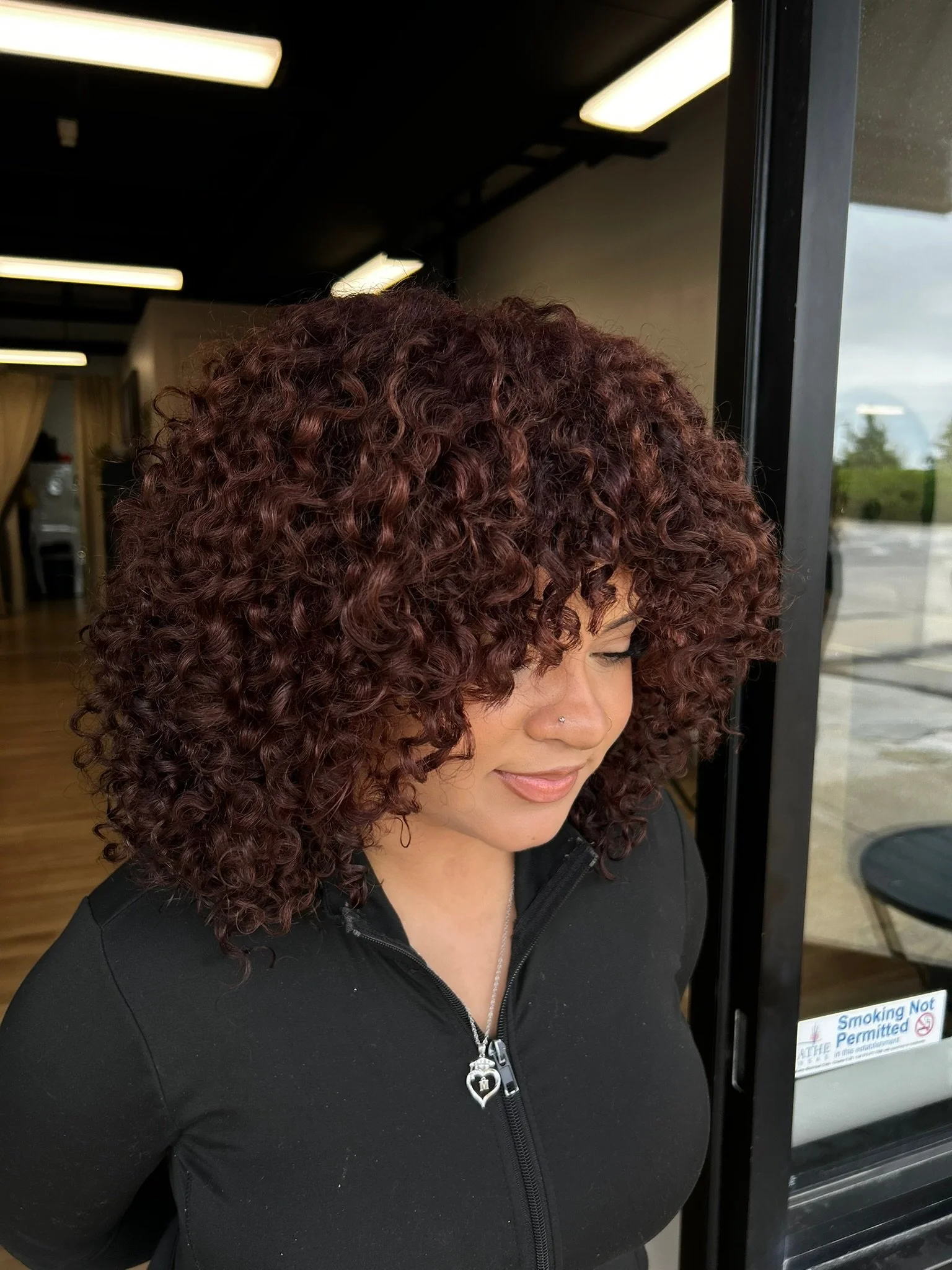
When curls look frizzy, it’s tempting to reach for more cream. Sometimes that helps. Other times, it leaves your hair feeling coated, your roots flatter, and the flyaways still there. Too much product, especially several rich products layered together, can make it harder to get the volume you want.
Before adding another layer, take a closer look at what your curls need. Conditioning, styling hold, product placement, and drying technique all play a part. A small adjustment to the right step can be more useful than adding another bottle to your routine.
And a little softness around your curls is normal. Your ideal finish might be full and airy, closely defined, or somewhere in between. Start with the look you enjoy wearing.
Start with when the frizz appears
Look at your curls just after styling, once they’re dry, and later in the day. Notice where the frizz develops: around your face, at the crown, underneath, or throughout the lengths.
If your hair already feels heavy or coated when it dries, review the amount of product you’re applying and whether your washing routine is keeping up with it. Adding a richer cream may compound the heaviness.
If your curls start out defined and gradually lose their shape, consider what happens between styling and the end of the day. Do you run your hands through them, put them up and take them down, or spend time outdoors? Those details can help you decide whether to adjust your styling hold or how you handle your hair.
For a Kansas City workday that ends with dinner in the Crossroads, take a quick photo before leaving home and another later. Similar lighting makes the comparison easier. Note any rain or humidity you encountered and whether you touched or tied up your hair. That gives you—and your stylist—a clearer picture of what changed.
Choose products for both softness and hold
Conditioning and hold serve different purposes. A conditioner or leave-in helps with softness and manageability. A gel or mousse can help curls keep their shape. Some styling creams provide both conditioning and hold, though the strength of that hold varies by formula.
That distinction matters when your hair feels soft but loses definition. Another conditioning layer may leave it feeling even softer without providing the control you wanted. In that situation, reviewing your styling product’s hold is a useful next step.
Look at your products in the order you use them and identify what each contributes. If several are adding richness, consider simplifying those layers. You’re looking for a combination that leaves your curls comfortable, defined, and as full as you like.
Match the formula and amount to your hair
Curl pattern is only part of choosing a product. The thickness of individual strands, how much hair you have, its length, and how dry it feels also matter. You can have fine strands and a lot of them, so needing enough product for coverage doesn’t necessarily mean needing a rich formula.
Leave-ins range from light sprays and milks to thicker creams. Tighter curls don’t automatically require the richest option, and “lightweight” on a label is a starting point for comparison. How your hair feels and looks after drying will tell you more.
Begin with the product’s recommended amount. If it repeatedly leaves your hair heavy, try a smaller amount before replacing the entire routine or moving straight to a stronger cleanser. Keep the amount easy to repeat—a consistent number of pumps or a similar-sized portion—and pay attention to where you apply it.
Apply evenly from front to back
Follow the directions for applying your product to wet or damp hair. Different formulas have different instructions, so use those as your starting point.
Divide your hair into manageable sections and work through them methodically. This makes it easier to cover the back and underneath without repeatedly adding product to the front. Arrange your usual part as you style, too, so you’re working toward the shape you want to wear.
Once you’ve distributed the product and arranged your curls, give them a chance to set. Repeatedly rearranging the same section can turn a straightforward routine into a cycle of touching, adding product, and starting again.
Give drying and finishing their own attention
Choose a drying method that fits the time you have, whether that means air-drying, using a diffuser, or combining the two. If drying routinely takes longer than you can manage, discuss your technique and dryer settings with your stylist. Increasing the heat isn’t always the right adjustment; excessive heat can damage hair.
If your gel dries with a firm or crunchy layer, that’s often called a cast. Wait until your hair is completely dry before gently scrunching it with dry hands to soften the finish, following the product’s instructions. That firmness during drying doesn’t mean your finished style has to feel stiff.
Avoid repeatedly combing through set styling product to chase individual flyaways. The American Academy of Dermatology cautions that combing hair after applying lasting-hold products can contribute to breakage.
If one section still needs work, remember where it is so you can adjust your application next time. Layering several unfamiliar products over the finished style makes it harder to work out what helped.
Make one change at a time
Keep your familiar wash routine while you test one adjustment: a smaller amount of leave-in, a different level of hold, more even application, or a change in drying technique. Replacing everything at once makes a good result difficult to repeat.
Once your hair is dry, consider the whole result:
Volume: Does it have the fullness you want?
Definition: Are the curls holding their shape?
Feel: Is your hair soft and comfortable, or coated and heavy?
Time: Can you realistically repeat the routine?
Compare a few ordinary days before deciding. An unusually humid afternoon or a different activity may affect the result, so keep that context in mind. If a product causes irritation, stop using it and seek medical advice if symptoms persist.
For the following morning, our guide to sleeping with curly hair and refreshing your curls covers ways to make the overnight transition easier.
Get curl help at Beauty Culture in the Crossroads
Bring photos of your curls at different points in the day, an example of the finish you like, and the labels of the products you use. Explain what matters most to you: more volume, longer-lasting definition, a softer feel, or less time spent styling.
Use the appointment to make the technique clearer, too. Ask your stylist to demonstrate one section, then try the next yourself. Practicing the movement helps you work out how you’ll reach the back and underneath when you’re styling at home.
If shape is part of the concern, our curly haircut guide explains what to discuss before a cut. Beauty Culture lists a Curly Hair Cut with Celena; select Celena in the salon booking tool and confirm the current price and preparation instructions for your appointment.
Our service menu also lists deep conditioning from $20 as an add-on to another service. Discuss whether extra conditioning suits your hair, particularly if heaviness or lost volume is your main concern, and confirm the combined appointment total.
Visit Beauty Culture at 501 Southwest Blvd in Kansas City’s Crossroads. Explore our team, book an appointment, or call (816) 603-2819 for help choosing the right service.