
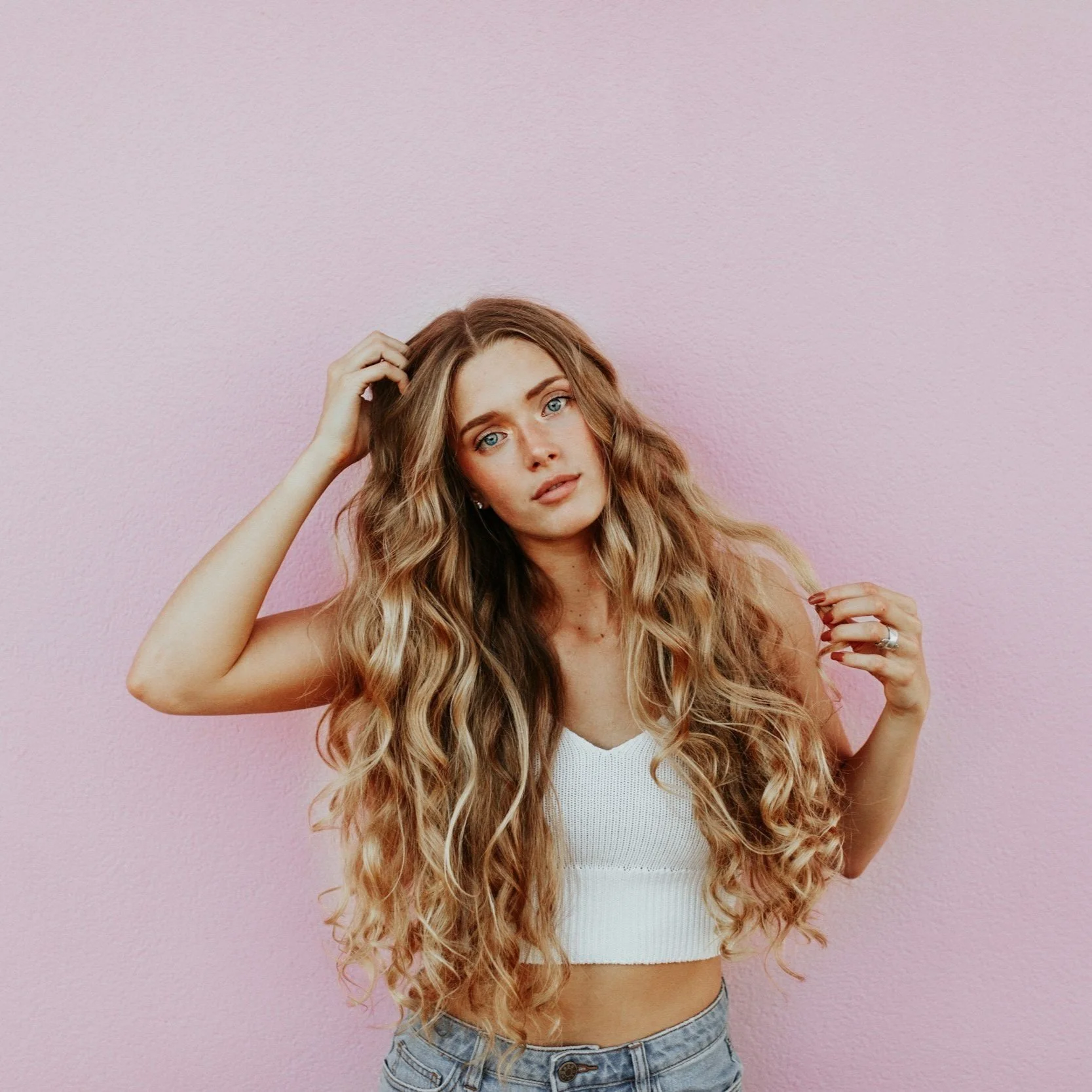
Balayage is a highlighting technique in which your stylist paints lightener onto selected sections of hair by hand. It’s often used to create softly blended brightness through the lengths and ends, with more depth near the roots. The result can be subtle or more noticeable, depending on where the highlights sit and how light you want to go.
You might want a little brightness around your face, more dimension through brunette hair, or a lighter overall look. Your starting color, hair history, and preferred finish help determine how to get there.
Balayage can be brunette, blonde, or somewhere in between
If you love being brunette, you can keep that overall richness while adding lighter pieces where you want them to stand out. A soft face frame or brighter lengths can give you a change without making blonde the dominant color.
For a blonde result, think about how much depth you want to keep. Bright ends with a darker root create a different effect from hair that looks blonde almost from the scalp down. Consider how light you’d feel comfortable seeing your hair in daylight, and choose references that reflect that.
Tone is another choice. The same highlight placement can look quite different with a golden, neutral, or cooler finish. Point out both the placement and the tone you like in your photos so your stylist understands the whole look.
How balayage compares with highlights and foils
The terminology gets easier when you separate the result from the method. Highlights are lighter sections of hair. Balayage is a way of placing lightener, while foils are a tool a stylist can use during a color service.
Those approaches can overlap. Foil work can create a soft, blended finish, and a photo labeled “balayage” may show a look achieved with several techniques. Your stylist may recommend hand painting, foils, or a combination based on your hair and the brightness you want.
A useful question is: “How would you create this amount of brightness and this kind of root transition on my hair?”
Our guides to balayage versus foilyage and lived-in color explain these differences in more detail. A lived-in finish describes the overall effect; the technique is how your stylist gets there.
Preparing for your first appointment
A few well-chosen photos and a clear hair history give your stylist a useful starting point. Bring a recent photo of your hair in ordinary lighting and two or three inspiration photos, then talk through these details:
Your color and treatment history. Include permanent color, box dye, previous lightening, and smoothing treatments, even if they were done long ago and remain only on the lengths. Mention any areas that feel fragile; a photo alone won’t show the full history or condition.
What you like in your references. Point out the roots, face frame, contrast, and tone. You might like the placement in one photo and the shade in another.
How you wear your hair. Show your usual part and explain whether you wear it straight, naturally textured, or pulled back. Your everyday styling belongs in the color conversation.
Anything you want to avoid. A bright front streak or a much lighter overall result may be outside your comfort zone. A photo you dislike can help, too, when you explain the specific feature that bothers you.
Your upkeep preferences. Be realistic about the time and budget you want to spend on future visits, and identify which change matters most to you now.
For example, you might say, “I’d like a little brightness around my face, but I want the rest of my hair to stay dark.” That gives your stylist a clear priority for discussing the placement, tone, and likely result of the first visit.
A bigger move toward blonde may require a more extensive appointment or several stages. Your stylist can assess your current hair and explain what is realistic before you commit to the plan.
Balayage pricing at Beauty Culture
For balayage, foilyage, and babylights, we can help you choose the appropriate custom-color service. Our color menu lists Lived-In/Dimensional Custom Color starting at $200. Pricing varies by stylist and the work involved, so request an estimate for the look you have in mind.
If your stylist recommends a partial or full service, ask which areas of your hair are included. Confirm whether the estimate covers a gloss or toner, haircut, and finish, and whether additional work changes the total. Sharing your budget early helps you agree on what to include now and what to plan for a later visit.
If existing color needs correction, that may change the appointment. Beauty Culture requires a consultation before booking a Color Correction/Transformation service.
Caring for balayage between visits
A soft transition at the roots can make grow-out less noticeable, but tone and condition still need attention. Before you leave, talk with your stylist about home care, suitable products, and the changes that would signal it’s time for another visit.
Your next appointment may focus on refreshing the tone, adding new lightness, or both. A gloss or toner can refresh the shade of existing highlights, while additional lightening changes how much brightness you have and where it sits. Our balayage maintenance guide explains how to think about that next step.
If your color looks different in a photograph, check it in ordinary daylight before changing your routine. Ask your stylist before adding a strong toning product so the choice suits your color and your hair’s condition.
Find your color stylist in Kansas City
Riley, Jordan, Cody, and Jada include dimensional color among their interests or specialties. Tristin specializes in lived-in blondes, and Courtney specializes in blonding.
Explore our stylist profiles to find someone whose work fits your inspiration. Your chosen stylist can help confirm the approach and appointment before you book your visit.
Beauty Culture is at 501 Southwest Blvd in Kansas City’s Crossroads. For help choosing a stylist or color service, call (816) 603-2819 and tell us a little about your hair history and what you’d most like to change.