
Why Your Blonde Turns Brassy—and What to Do About It
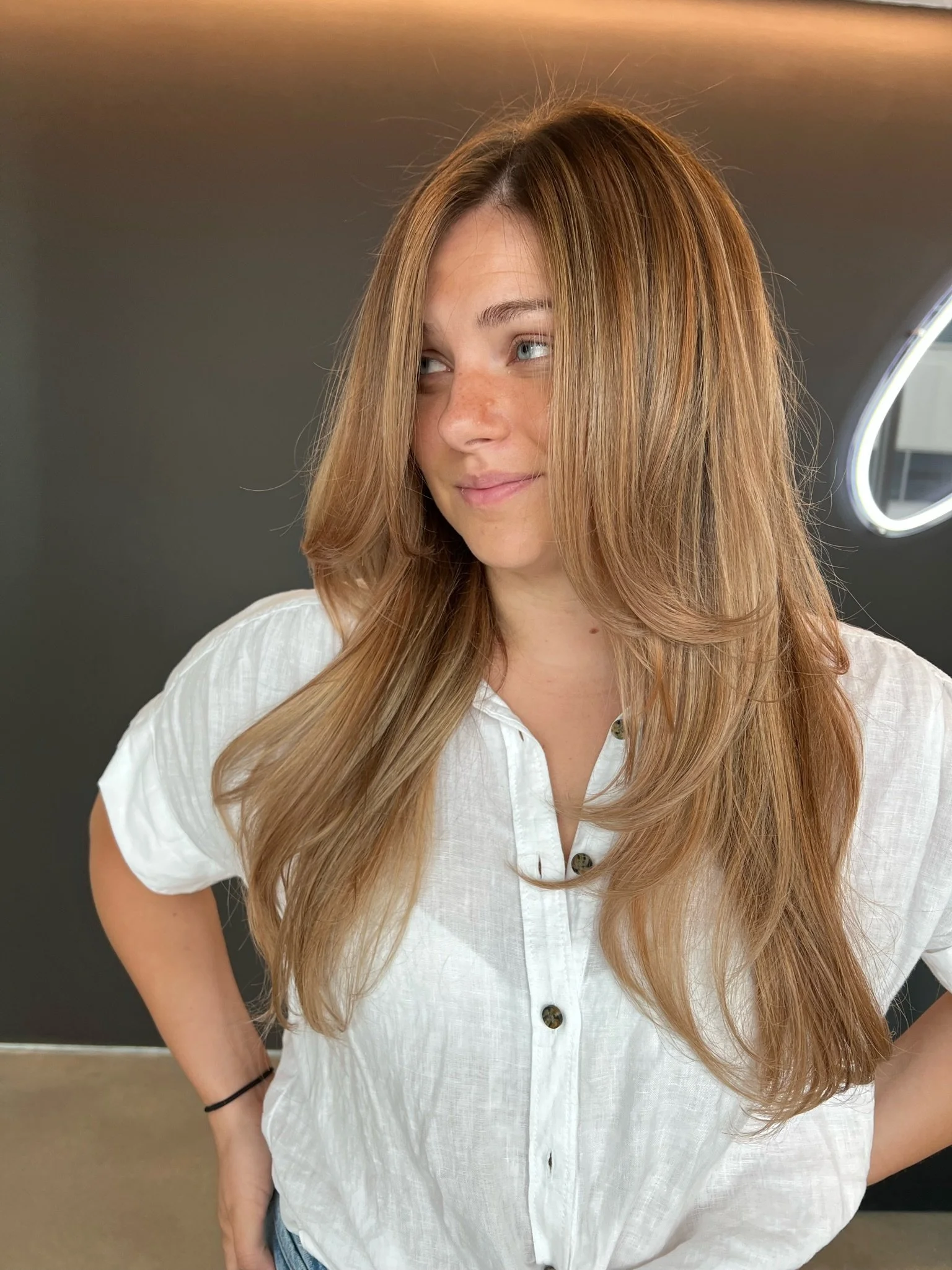
Your blonde looked just right when you left the salon. Now the ends seem yellower, or a few pieces have taken on an orange cast. That unwanted warmth is what colorists call brassiness, and it often becomes more noticeable as your toner fades.
A slight yellow shift may improve with the right home toning routine. If you want the overall shade refreshed or darker sections made lighter, you'll need a different approach. Here's how to make sense of the change and decide what your hair needs.
Why the warmth comes back
Lightening exposes warm underlying pigments in your hair. Your colorist uses toner to refine those tones and create the blonde you chose. As the toner gradually fades, some of that yellow or orange can show through again, even though the lightened sections remain.
Washing, frequent heat styling, sun exposure, and swimming can contribute to color changes between appointments. Product residue and mineral buildup can also affect how your blonde looks. A change in color alone doesn't identify the cause, though: the timing and your recent routine help explain what's happening.
Think about whether the warmth developed gradually or appeared after a new product, a swim, or a change in your water supply. If you've recently moved, mention that too. Our guide to hard water and hair in Kansas City explains the buildup side in more detail. These clues help your stylist decide what to address; a warmer result doesn't automatically mean the original service went wrong.
Start with the blonde you actually want
Honey, golden, and buttery blondes are meant to have warmth. Before trying to remove it, compare your hair with the shade you and your stylist chose. A golden blonde and an icy blonde have different goals, and making a shade cooler doesn't necessarily make it look brighter.
For a useful comparison, look at your hair dry and styled as you normally wear it, in indirect daylight. Check the back and lengths as well as the pieces around your face, and take an unfiltered photo. Similar lighting matters: a warm bathroom bulb can make your color look different from a salon photo taken beside a window.
You don't need color terminology to explain what you see. “The ends look yellower,” “The front is cooler than the back,” or “I like the gold, but want more brightness” tells your stylist what you want to change and what you want to keep.
Where purple shampoo helps
Purple shampoo deposits violet pigment to soften unwanted yellow tones. Blue pigment counteracts orange. The right choice depends on the tones in your hair and how light it is, rather than simply whether the bottle says “blonde” or “brunette.” Your stylist can help you choose a formula suited to your color.
These products adjust the appearance of color; they don't lighten dark sections or change where your highlights sit. Leaving purple shampoo on longer won't turn an orange or darker base into pale blonde. If you're hoping for a much lighter result, our guide to what to expect when going blonde explains why your starting point matters.
Follow the directions for your particular product and your stylist's advice on frequency. More pigment isn't always better: repeated applications or layering several toning shampoos and masks can leave hair looking dull, violet, or uneven, especially where some sections absorb color more readily than others.
When a salon refresh makes sense
If your color is even and only slightly yellower than you'd like, a suitable home toning routine may be enough. When you still love your highlights but want the overall shade refreshed, a professional gloss or toner can be a good next step.
The conversation changes when you want darker pieces to become blonde, or when you see distinct bands and patches. Those concerns need a colorist's assessment because the work may involve lightening or correcting uneven color. A sudden change after a product or water exposure also deserves a closer look before you add more pigment.
Hair condition matters here too. Let your stylist know about breakage or scalp discomfort before another color service. Persistent irritation or unexplained hair loss should be assessed by a medical professional.
For a wedding, photos, or another event, get in touch early and share the date. That leaves time to choose an appropriate appointment and avoids a last-minute experiment with unfamiliar products.
Keep your care routine consistent
Start with cleansing and conditioning products suited to your color, hair condition, and scalp. Wash often enough to keep your scalp comfortable and your hair clean. Toning products can fit into that routine without taking over every wash; the right schedule depends on the formula and how your hair responds.
A few practical habits can support your color between visits:
Be thoughtful with heat. Use heat protection and avoid unnecessary heat or repeated passes with hot tools.
Plan for sun and swimming. Cover your hair during prolonged sun exposure and rinse it with fresh water after swimming.
Treat buildup when it's present. If your hair feels coated or looks unusually dull, discuss whether a clarifying or mineral-removal product would help. Extra cleansing can also fade toner, so it isn't the answer to every warm tone.
For more on washing and styling between appointments, see our guide to maintaining vibrant hair color.
Make the most of your appointment
Bring your current daylight photo and a photo of the finish you preferred. Your stylist will also need your last color-service date and the names of products you've used since, including toning shampoos, masks, temporary colors, and clarifying treatments. If you tried an online routine, share the steps and how long you left each product on. There's no need to worry about whether you did it “right”—the details are useful.
Be clear about the result you want: softer warmth, more brightness, or a different shade. Then agree on what the appointment will cover. A tone refresh doesn't automatically include lightening, a root retouch, or all the services from your previous color appointment. Before you leave, establish what your next visit should maintain.
Refresh your blonde at Beauty Culture
At Beauty Culture in Kansas City's Crossroads, Quick Tone/Gloss starts at $50 and is designed to refresh tone and shine between color appointments. It's an option to discuss when you like your existing placement and want to refine the shade. Prices vary by stylist. Confirm whether finishing is included and, if additional color work is recommended, what it would address and how it changes the appointment and total.
Explore our color services and meet our stylists to find a colorist whose work fits your goals. If you're unsure which appointment to choose, call (816) 603-2819 and we'll help you get started.
Visit us at 501 Southwest Blvd, Kansas City, MO, in the Crossroads, or book your appointment online.