
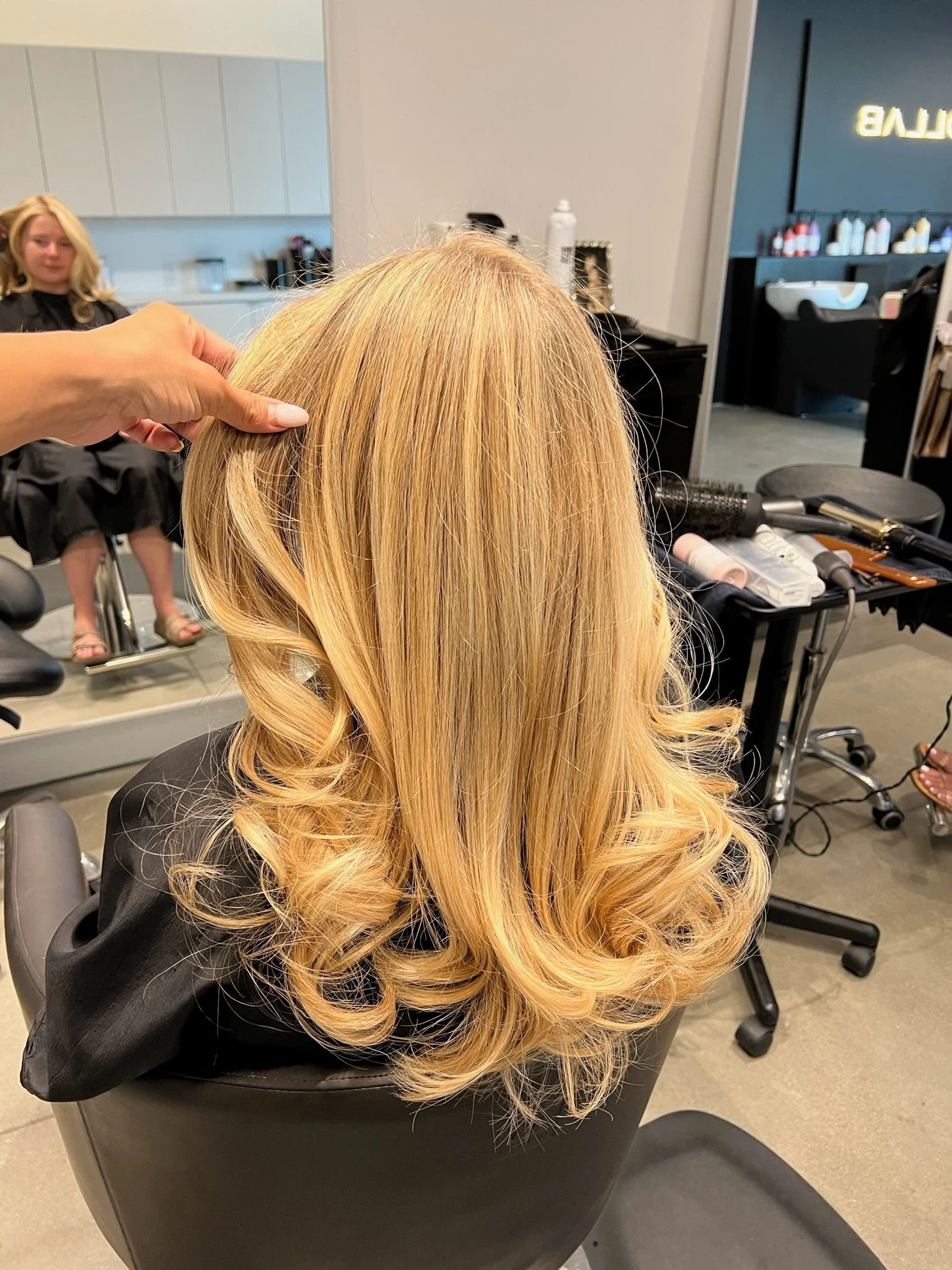
You might be drawn to soft honey highlights, a bright face frame, or a much lighter blonde from roots to ends. Whatever your inspiration, the goal is a color you enjoy wearing and a routine you can keep up with.
Getting there starts with your current hair. Its color history and condition help determine what’s possible in the first appointment and whether you’ll need a more gradual change. Here’s how to prepare for going blonde at Beauty Culture in Kansas City.
Start with the look, then choose the technique
When you bring an inspiration photo, show your stylist what caught your eye. You may love the bright pieces around the face but prefer a deeper root, or want a golden blonde rather than the cooler shade in the picture. Brightness, placement and tone are separate choices, so you can borrow parts of a look without copying all of it.
If you’re unsure how to describe the shade, our guide to warm, cool and neutral blonde can help you put words to the honey, beige or cooler tones you like.
Your priorities matter just as much as the photo. Let your stylist know how often you want to return and how much time you’ll spend on your hair at home. If keeping your length matters more than reaching the lightest blonde right away, say so. That gives your stylist a clear direction when a look involves tradeoffs.
The technique comes next. Foils, balayage and foilyage are different ways to create brightness and placement. You don’t need to choose one before your consultation; your stylist can recommend an approach that fits your hair and the result you want.
Give your stylist the full hair history
Your natural roots tell only part of the story. Previous color and chemical services can still matter on the lengths, even when the original shade has faded.
Share any salon color, box dye, bleach, lightening sprays, tinted masks, henna or other plant-based color you’ve used. Include relaxers, perms and smoothing treatments, too. Approximate dates are helpful, along with how much your hair has grown or been cut since the service.
You don’t need perfect records. A product name, a photo of the label or the packaging can help fill in the details. If you’re unsure what was used, let your stylist know rather than guessing. Mention any recent breakage, unusual tangling or scalp sensitivity as well; those changes help them decide what to check before lightening.
What happens before the color service?
Your stylist may suggest a strand test, which shows how a small section of hair responds to the planned process. It helps them evaluate both the color and the condition afterward. Different areas can respond differently, so the test informs the plan without predicting every strand perfectly.
A skin allergy test has a separate purpose: screening for a reaction to a color product. Ask which tests are needed for the products being used and when to have them done. A previous color service without a reaction doesn’t replace the testing required for a new product.
As the American Academy of Dermatology explains, lightening can leave hair dry and brittle, especially when the color change is substantial. A careful approach can limit damage, but no technique is gentler for everyone or guarantees a damage-free result.
Why your blonde may take more than one appointment
For a bigger change, your first appointment may be one step toward the final shade. Your stylist should explain what you can expect to leave with, including whether it will be warmer or deeper than your inspiration photo. You’ll be wearing that color between visits, so it should be a shade you’re comfortable with.
Working in stages also gives your stylist a chance to reassess before going lighter. Time between appointments doesn’t undo earlier chemical processing, and a set number of weeks can’t tell you whether your hair is ready for more. That decision depends on its condition and how it responded to the previous service.
If your original goal would put too much strain on your hair, there are other ways to create a change: brighten fewer pieces, keep more depth, choose a different tone or postpone further lightening. Agreeing on those possibilities early makes the first appointment easier to plan.
What does going blonde cost?
Beauty Culture’s color menu lists these starting prices:
Service Starting price
High Lift/Level Custom Color (Blondes) From $210
Color Correction/Transformation From $300
A consultation is required before a Color Correction/Transformation appointment. Each starting price applies to the service listed; the full cost of a transformation depends on your stylist, the work involved and any additional appointments.
The right booking depends on what your hair needs. Moving from repeated dark dye to a much lighter blonde may call for a correction assessment, while changing the placement of existing blonde may involve a different service. Our guide to color correction in Kansas City explains what that process can involve.
Before the color service, make sure your estimate covers:
The result: How light you’re aiming to go, where the blonde will be placed and what tone to expect at this stage.
The work included: Which areas will be treated and whether toner, a haircut and the finish are included or priced separately.
The time and cost: How long to allow, the quoted total, what could change it and the spending limit you’ve agreed on.
The next step: What your stylist will reassess before further lightening and how any later appointments will be quoted.
When arranging the consultation, check whether there are consultation or testing fees. For a gradual transformation, budget from the estimate for each stage rather than multiplying a menu price by a guessed number of visits.
Make your home care fit your routine
Before you commit to a blonde look, talk through how you’ll care for it. Your cleansing, conditioning, detangling and hot-tool habits all matter. If you tend to style quickly at high heat or want a short routine, share that now so your stylist can account for it.
Ask for a routine suited to your new color and texture, with a clear distinction between essential steps and optional products. You should leave knowing what to use, how to use it and which habits need to change.
Conditioning and repair treatments can support your routine, but they don’t guarantee your hair can tolerate more lightening. If you notice new breakage, check in with your stylist before the next color service.
Plan your blonde appointment in Kansas City
Explore the Beauty Culture team to find work that speaks to you. Courtney and Cody specialize in blonding, and Tristin focuses on lived-in blondes. Riley, Jordan and Jada offer dimensional color, while Cristina’s services include color and blonding.
Bring your inspiration photos, hair history and maintenance budget to the conversation. Visit our booking page, or call (816) 603-2819 for help choosing the service and arranging a consultation. You’ll find Beauty Culture at 501 Southwest Blvd in Kansas City’s Crossroads.