
How to Care for Your Scalp While Wearing Braids
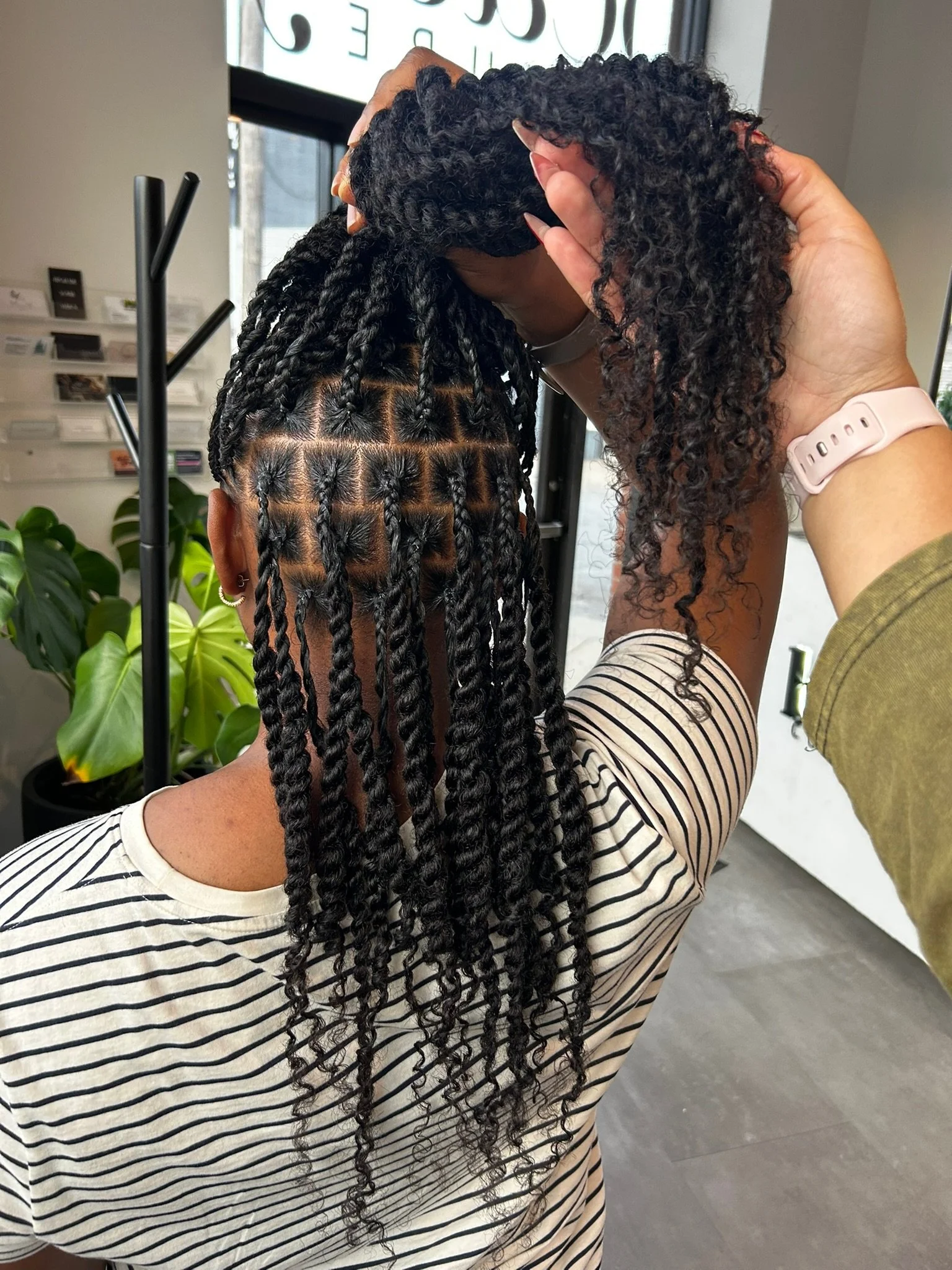
Braids can make your morning routine easier, but your scalp still needs regular care. Keeping it clean and comfortable starts with a routine you can manage at home.
Before leaving your braid appointment at Beauty Culture in Kansas City’s Crossroads, have your stylist walk you through washing, rinsing and drying your style. A demonstration on your own hair is much more useful than a general instruction to “keep it moisturized.”
Start with a routine that fits your life
Your aftercare should account for how often you work out, whether you swim and how much time you have to wash your hair. Bring the names or photos of products you already use, especially anything applied directly to your scalp, and mention recurring sensitivity or irritation.
If you have a diagnosed scalp condition or use prescribed treatments, discuss your hairstyle with your clinician and share the relevant care instructions with your stylist.
The details of your braids matter, too. Your scalp, natural hair, added hair and any loose decorative pieces may need different care. Before the appointment ends, make a quick note of each recommended product, where to apply it, how to rinse it and what to do afterward.
Still deciding on a style? Our protective-style planning guide can help you compare the upkeep before committing.
Keep cleansing part of your routine
Braids don’t replace wash day. The American Academy of Dermatology’s healthy-hair guidance recommends washing according to how oily or dirty your hair becomes, concentrating shampoo on the scalp and using conditioner afterward. Your hair type and activity level help determine the schedule. There isn’t one washing schedule that suits everyone with braids.
Work gently along the exposed partings to reach your scalp, avoiding rough rubbing or pulling, and rinse thoroughly. Have your stylist demonstrate on your braid pattern and explain where to apply conditioner for your particular style and added material.
Follow the product directions, and check before substituting a homemade mixture, heavily diluted shampoo or no-rinse cleanser for your usual wash. Those options may not clean in the same way.
Leave enough time for drying
Plan for the whole wash, including drying. The method should suit both your natural hair and any added material, so get clear instructions before your first wash at home. Excessive heat can damage hair; turning up the dryer to finish faster is a poor trade-off.
If washing and drying your braids will be difficult to fit into your week, discuss that before your appointment. A more manageable design or a different care plan may make the style easier to live with.
Give each product a purpose
A simple routine makes it easier to tell what works for you, so each product should have a clear purpose.
Itching doesn’t automatically mean your scalp needs oil. Product residue, a reaction to something you’ve applied or a scalp condition can also cause it. A strong tingling sensation doesn’t prove a product is working, and a “natural” label doesn’t guarantee it will suit your skin.
If a product irritates your scalp, stop using it and seek advice instead of layering something else over it. A brief note of wash days, new products and changes in comfort can help if you need to discuss a problem later. A few dated lines on your phone are enough.
Keep everyday styling comfortable
Pay attention to how your braids feel in a ponytail, bun or the hairstyle you wear to work. Gathering them tightly or pulling them in a different direction can create tension even when they felt comfortable worn down. Show your stylist how you usually wear them, including beneath a head covering.
At night, arrange the lengths loosely and use a covering that doesn’t pull. Choose something comfortable to sleep in and easy to undo in the morning.
Keeping every parting pristine is optional. Gentle handling and regular cleansing deserve more attention than extra styling steps.
Act promptly if your braids hurt
The American Academy of Dermatology advises changing a tightly pulling hairstyle immediately if it causes pain, stinging or crusting. Contact your stylist promptly to have the tension relieved. Don’t wait for your next wash or planned removal date.
Your stylist can help with aftercare and adjustments. Persistent irritation or concerns about hair loss need a dermatologist, who can assess the cause. An article or online photo cannot diagnose the problem.
When requesting help, describe where the discomfort is, when it started and whether changing how you wear the braids affects it. Include the installation date, products used and care you’ve followed since the appointment. That gives the person helping you a clearer picture.
Plan for aftercare and removal costs
If you expect to need professional help between braid appointments, find out what your chosen provider offers, whether it requires a separate appointment and what the full quote includes. Beauty Culture’s service menu, checked October 11, 2026, does not list dedicated prices for cleansing installed braids, an aftercare check-in or braid takedown.
For local budgeting context, Black Dymond Salon in Kansas City, Kansas lists Braids Take Down/Loc Removal from $40, with a wash and blow-dry included. Confirm the option and total for your style. This is a removal service followed by cleansing, not a price for washing braids while they remain in place, and it is not a Beauty Culture rate.
When asking for a quote, specify the service you need and share your style and installation date. If discomfort is the reason for reaching out, mention that immediately. Concerning symptoms need prompt attention, even when that means changing your removal plans or budget.
Before you head home
You should leave your appointment knowing:
How to cleanse your scalp and rinse thoroughly.
Which products to use and where to apply them.
How to dry your braids and handle them comfortably.
What changes mean you need help or earlier removal.
Save your stylist’s contact information with those instructions so follow-up questions are easy to address.
Explore Celena Wilcox’s and Kianna Evans’s profiles for braiding services at Beauty Culture, then visit our booking page to plan your appointment. For questions about aftercare support, call (816) 603-2819. You’ll find us at 501 Southwest Blvd, Kansas City, MO, in the Crossroads.