
Hair Extensions for Fine Hair
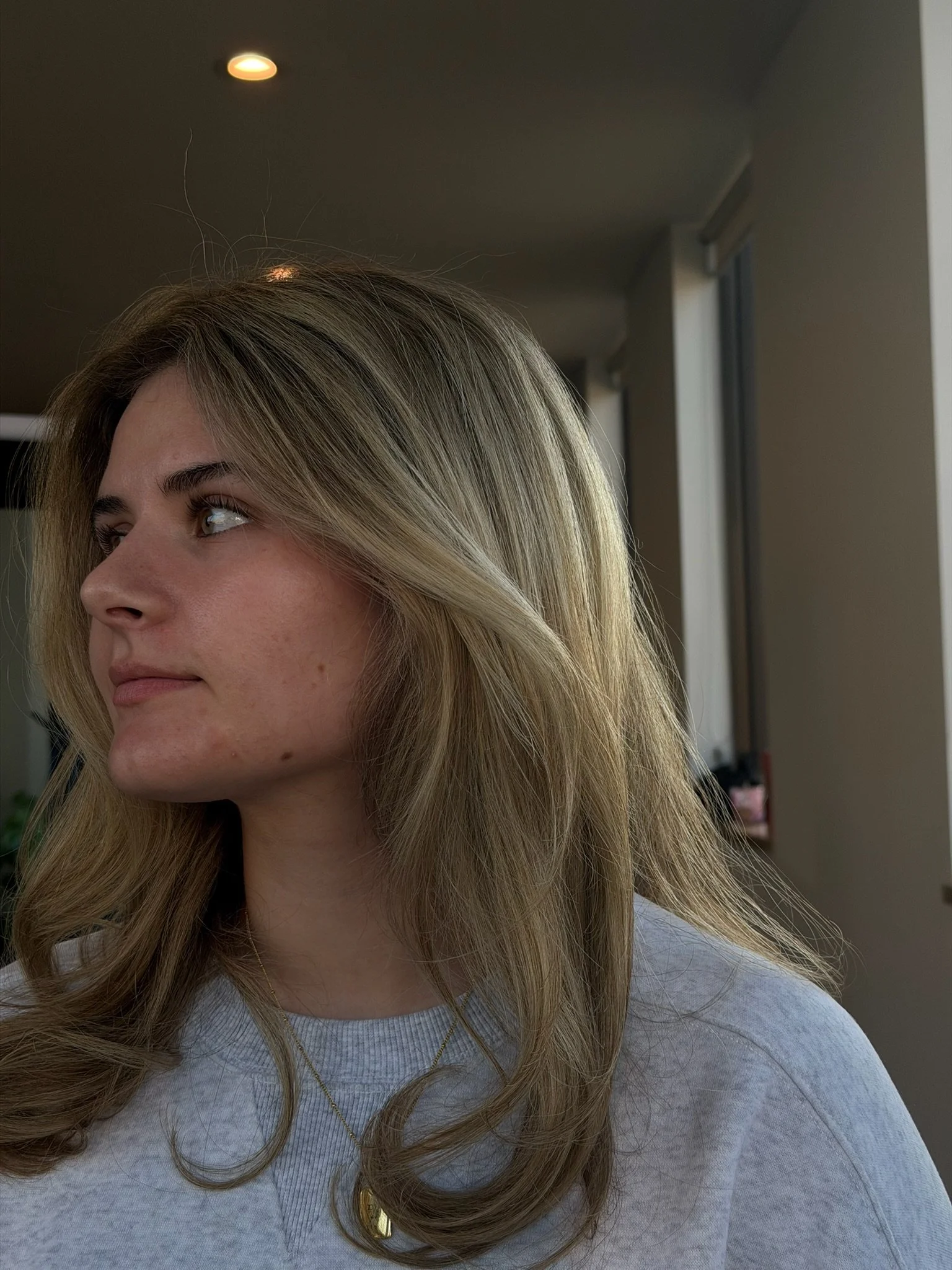
Extensions can add fullness or length to fine hair, but the right choice depends on more than strand thickness. How much hair you have, its condition, and the weight and placement of the extensions all matter.
If you’re exploring extensions at Beauty Culture in Kansas City’s Crossroads, start with the change you want to see. Your stylist can then help you work through the options, from a little more fullness at the ends to a longer style.
Fine hair and low density mean different things
Fine describes the thickness of each strand. Density describes how much hair grows across your scalp. You can have fine hair and plenty of it; you can also have fine hair with less coverage. Because “thin” is often used for both, online recommendations can be confusing.
At your consultation, describe what you notice: strands that have always been delicate, a ponytail that has become smaller, or attachments that showed through with a previous set. Mention recent shedding or breakage, along with your color and chemical-service history. Hair that has always been fine needs a different assessment from hair that is becoming thinner or breaking.
Be specific about the result you want
If you like your current length, you may want fuller ends without a major change in length. Saying “I want my ends to look fuller when I wear my hair straight” gives your stylist a clearer starting point than a photo of very long, dense hair.
A focused goal may call for less added hair, although it doesn’t automatically mean one row is the right amount. It’s also worth discussing what a haircut, a different finish, or a styling adjustment could achieve. You may find a look you enjoy without extensions, or decide to revisit them later.
Your hair needs to support and conceal the extensions
Before recommending a method, your stylist needs to assess two things: whether the hair at the attachment points can support the added weight, and whether there is enough surrounding hair to keep the attachments hidden.
Those are separate requirements. Even a set your hair can support may show through at your part or hairline. That’s why a photo of the back of your hair can’t tell the whole story.
Show your stylist how you usually part and style your hair, including ponytails or updos you rely on for work, exercise, or comfort. Discuss the sides and hairline as well as the back. Ask where the extensions would sit, how much hair would be added, and why that amount makes sense for you. Even with a “lightweight” product, your stylist needs to consider the total weight of the installation and how it will be distributed.
Extension options to consider
Tape-ins and wefts, individual bonds, and removable pieces each offer different ways to add hair. The details of the product and fitting matter, and methods offered vary by professional.
Tape-in extensions
Tape-ins use adhesive panels to attach extension hair to your natural hair. Flat panels can be discreet, but they still need enough coverage to stay hidden and enough healthy hair to support them. Tell your stylist about previous adhesive reactions, and discuss professional removal so you know how the panels will be released without unnecessary pulling.
Weft extensions
Wefts are sections of extension hair that can be installed in rows. Hand-tied describes how a weft is made; it is one of several weft types. Ask which product and attachment method your stylist proposes, how the row would be supported, and how the combined weight would be distributed. The full installation needs to suit your hair, including the foundation beneath the wefts.
Individual bonded extensions
These attach small sections of extension hair to sections of your own hair. Great Lengths offers pre-bonded options for adding volume and length. Your stylist should explain how the bond size, placement, and amount of hair at each attachment would work with your density and condition. Small attachments still need adequate support.
Removable hairpieces
For occasional styling, a removable piece may be worth considering. Fit still matters: clips and other attachment points can pull, and the piece needs enough natural hair to blend with it. Have your stylist assess its weight, how it sits, and whether it works with the styles you want to wear.
When to wait before getting extensions
New or unexplained hair loss, scalp irritation, or significant breakage should be addressed first. A widening part, for example, deserves an assessment of why your coverage is changing. A stylist can help with cosmetic options; a dermatologist can investigate the cause of hair loss.
If you already wear extensions, take pain, stinging, or new thinning around an attachment seriously. Contact your stylist promptly to have the tension relieved and the extensions adjusted or professionally removed. The American Academy of Dermatology warns that continued pulling can cause permanent hair loss. You shouldn’t have to tolerate pain to keep extensions secure.
Also discuss past extension problems, including pulling, matting, adhesive reactions, or difficult removal. Understanding what happened should guide the next recommendation.
Choose a routine you can maintain
Before committing, ask your stylist to walk you through washing, drying, and detangling around the attachments. Find out how often you’ll need maintenance and what to do if a section slips, tangles, or starts to feel different.
Talk through the practical details of your week. Swimming, frequent workouts, and travel can affect how you manage your hair, and you’ll need time for both home care and return appointments. If the recommended routine is more than you can realistically maintain, discuss a different option before purchasing hair.
Understand the full cost
Beauty Culture’s extension menu lists beaded-row/sew-in application from $175 per row, as of October 11, 2026. That figure covers the application per row; it is not a complete installation quote or a package for fine hair.
Once your stylist has recommended a suitable amount of hair, ask for the full price, including the hair itself, installation, and any cutting or blending. Confirm what your provider includes, then budget for maintenance and eventual removal. A lower initial price is only useful if the ongoing appointments and care also fit your budget.
Plan your consultation at Beauty Culture
New extension installations at Beauty Culture require a complimentary consultation. Explore our team and confirm your chosen stylist’s methods and approach to assessing fine hair. Bring inspiration photos, your hair history, and examples of the everyday styles you want to keep.
Book your consultation, or call (816) 603-2819 for help choosing a stylist. You’ll find us at 501 Southwest Blvd, Kansas City, MO. We’ll start with what you’d like to change and talk through what your hair and routine can comfortably support.